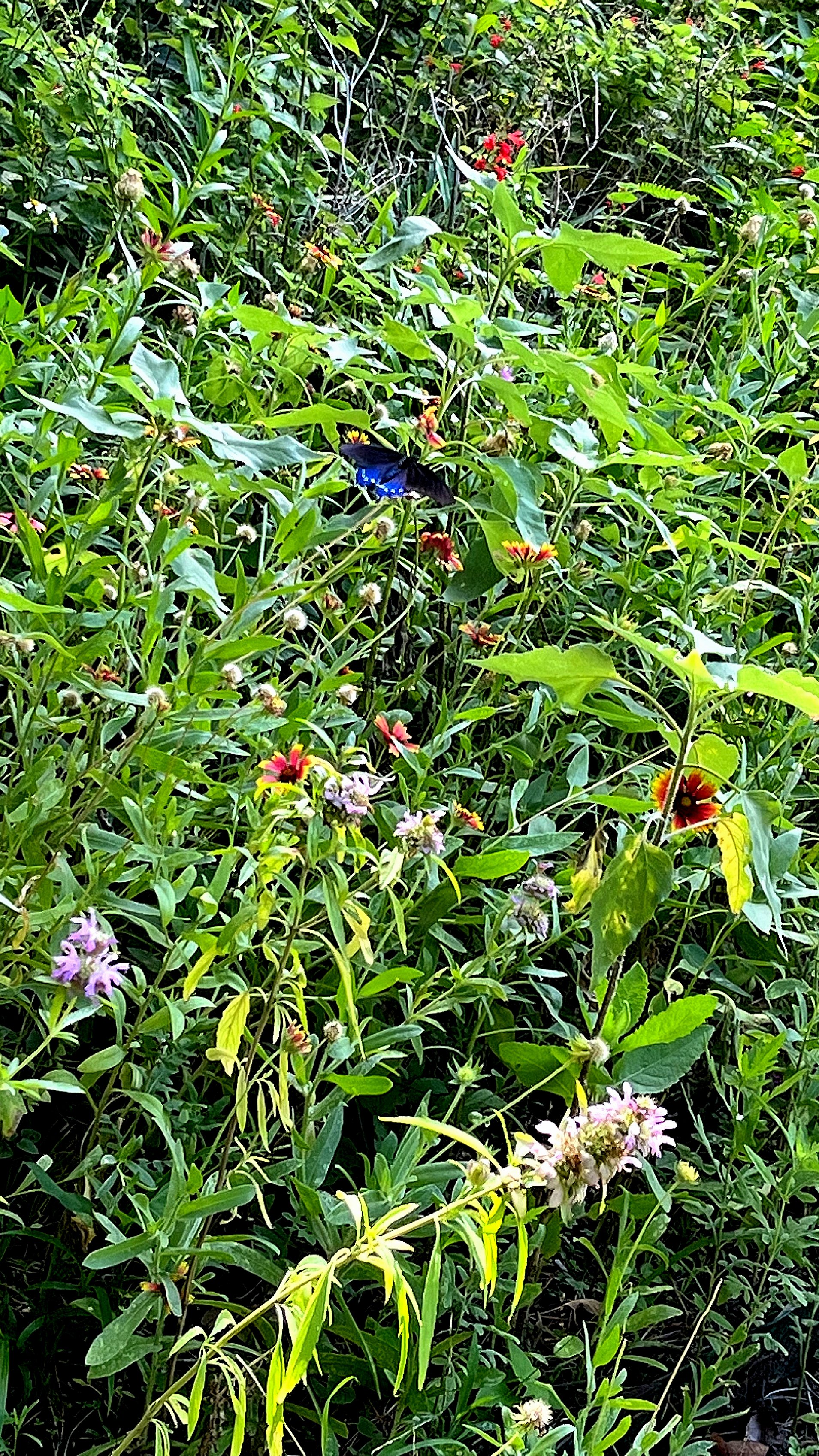
Midsummer in the LCNP wildflower garden.
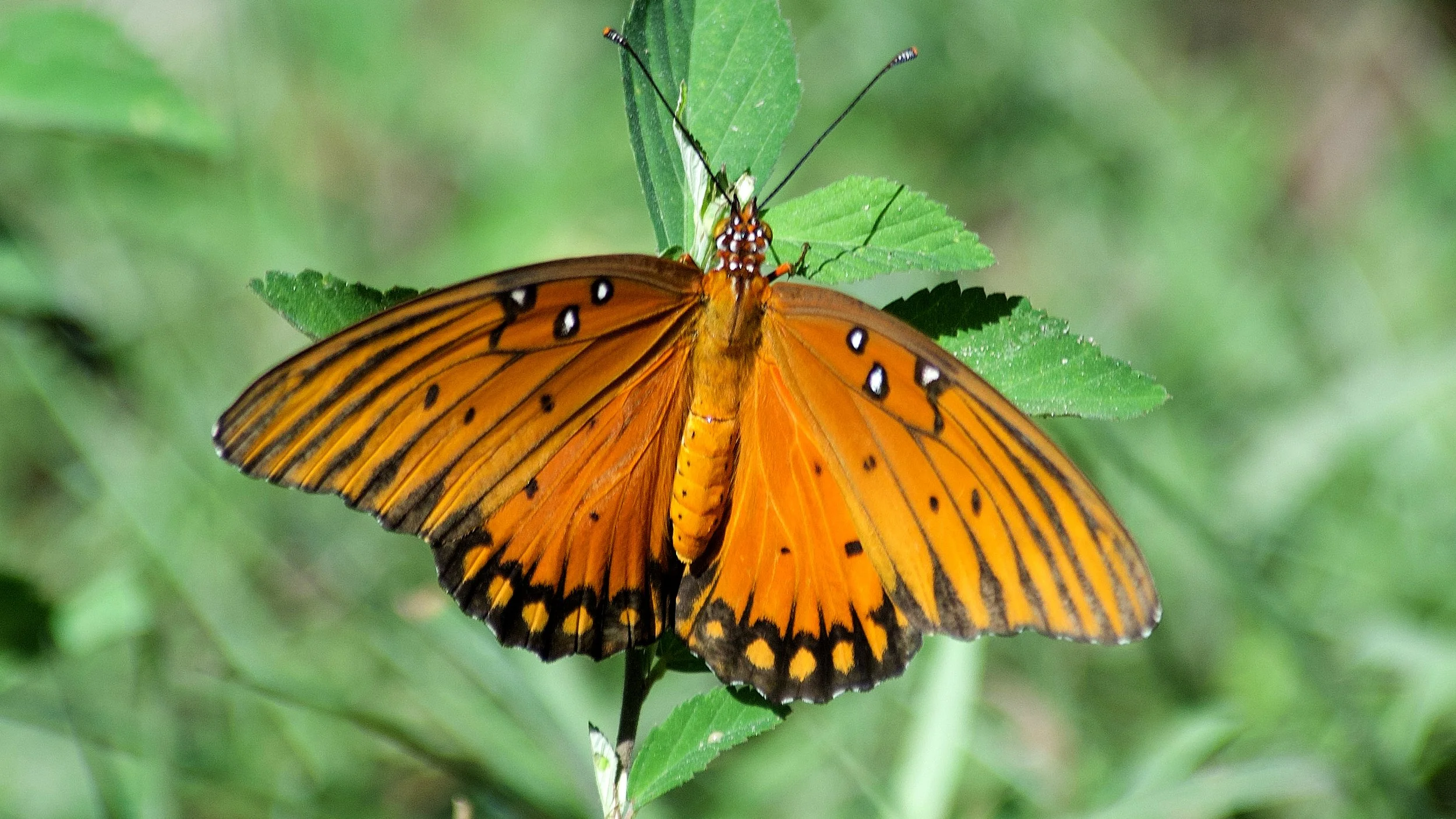
Welcome to the Native Flower Garden at The Lorraine Cherry Nature Preserve. This garden was started by neighbors Nancy Greig and Eddie Holik in 2007 to welcome butterflies, bees, and other beneficial insects by providing them with food and shelter. This location was selected because it provides at least 6 hours of sunlight, an essential factor for flowering plants. Native plants were chosen because they support a large number and wide variety of beneficial insects. In addition, plants that bloom at different times throughout the growing season (early spring to late fall) were selected in order to provide a steady food supply. After all, Albert Einstein once said, “The only reason for time is so that everything doesn’t happen at once.”

Pipevine Swallowtail at LCNP.
In addition to the sunlight helping the plants to flower, it also helps cold-blooded butterflies to warm their bodies as they begin their day. The plants are arranged in clusters because butterflies, like many insects, are nearsighted and it’s easier for them to spot clusters rather than single plants.
At the end of the growing season, leaf litter and dead perennial plant material will be left in the garden until spring to provide the overwintering insects with some protection from predators, such as birds. The seeds from the plants that are left during the winter will also spring to life in the spring with new flowering plants. This allows us to not have to add seeds and plants in the future, we will only have to weed and maintain it on a somewhat regular basis.

Spring at LCNP.
In addition to providing habitat for wildlife, this garden helps conserve water by growing native plants. When the garden was created, healthy soil was built by using compost to incorporate organic matter. Since that time, we have avoided synthetic fertilizers and pesticides that contribute to runoff pollution. By allowing the leaf litter and dead perennial plant material to remain in the garden over the winter, the garden produces its own compost yearly. These gardens provide an excellent example of the types of eco-friendly choices you can make in your own landscape at home. Many nearby neighbors are doing just that!

Sunflower in LCNP.
The Nature Preserve is about so much more than our trees. It is a place of refuge in our busy urban environment for wildlife as well as people. Please be kind when you visit, realizing that you are a visitor to our urban animals’ homes. Please do not remove anything from the Nature Preserve, or move anything about within the preserve. Please stay on the paths (and keep your dogs on-leash and on the paths with you at all times) in an effort to foster more livable spaces for our plants and animals. It is only by working together to preserve our amazing piece of urban nature that we will have beautiful moments with flowers, trees, birds, butterflies, and our neighbors.