In the spring of 2026, Hummingbird Haven was installed as an Eagle Scout Project by Claire Throckmorton. The Friends group had long wanted to plant a hummingbird garden because Texas is in the middle of the hummingbirds’ migration routes.
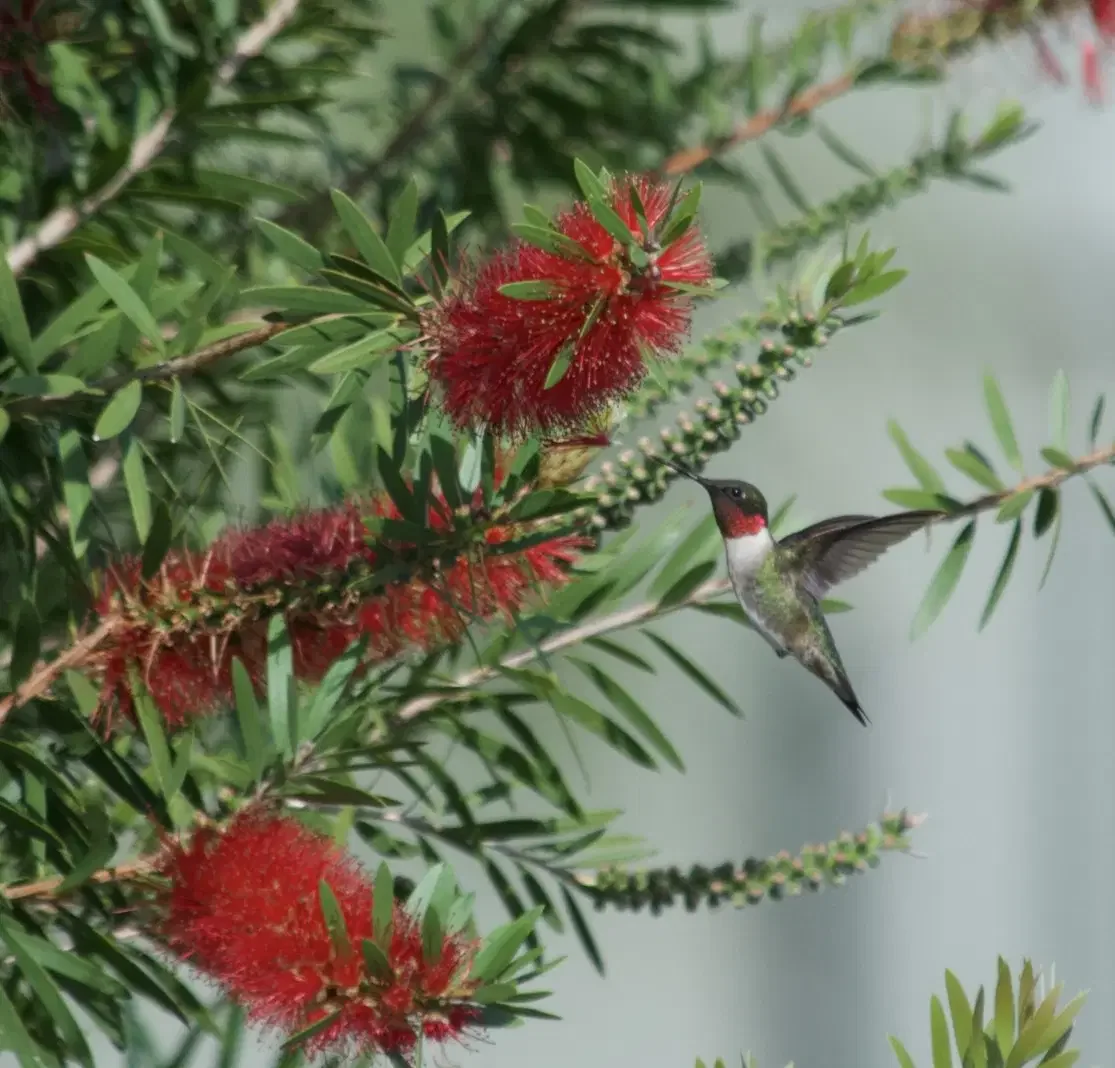
Often seen along the migration route in the Houston area in the spring mid-March to mid-May and in the fall in late August through September are Ruby-throated, Black-chinned, Rufous, Buff-bellied, Allen’s, Anna’s, and Broad-tailed Hummingbirds. In fact, Ruby-throated Hummingbirds are common in all of East Texas in forests and prairies, and some will even stay in the greater Houston area for the summer.
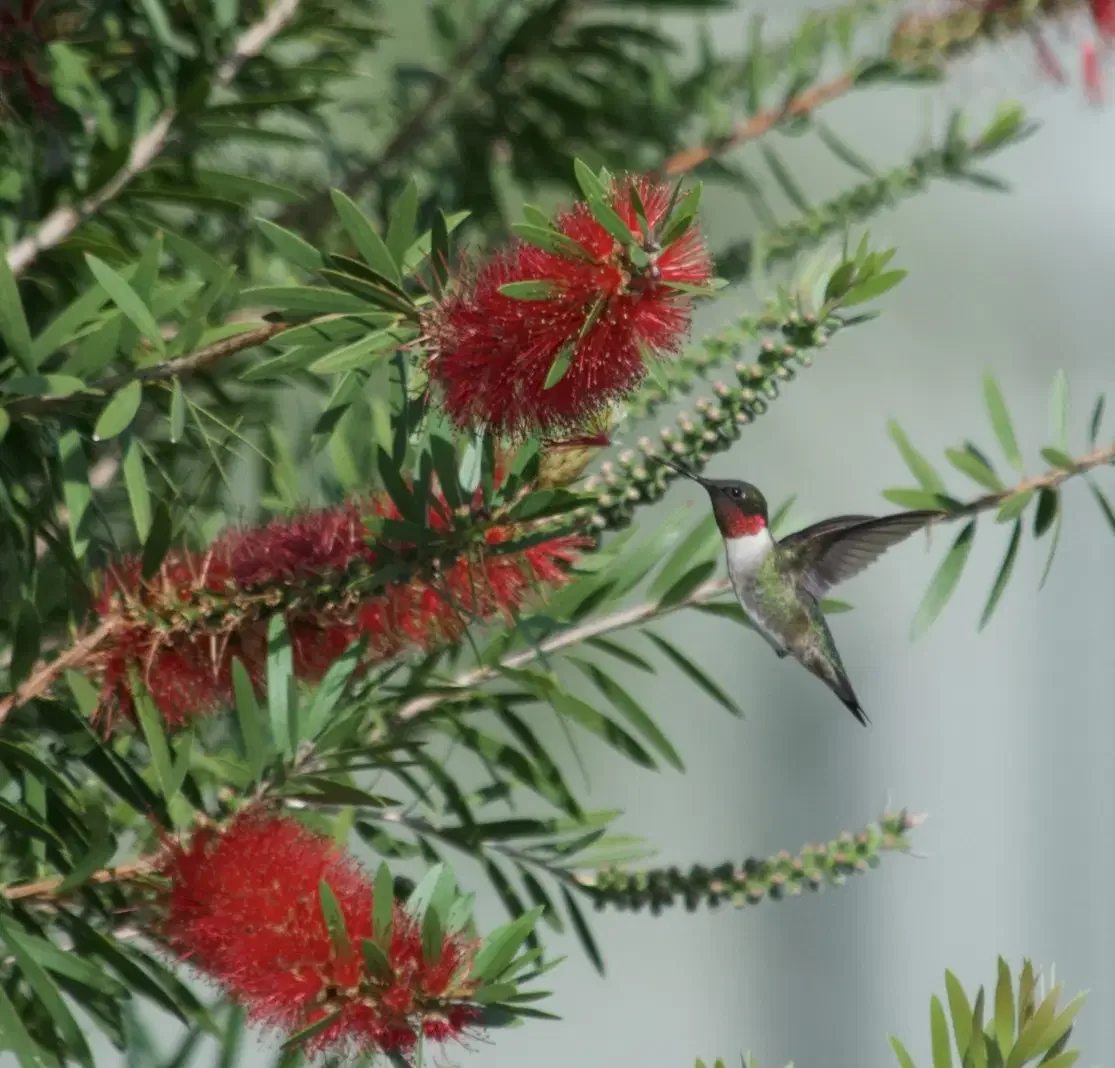
Ruby-Throated hummingbird.
The best way to lure hummingbirds is to plant their favorite kinds of flowers in your garden. This will dramatically increase your chances of attracting them. Hummingbirds are attracted to red, pink, orange, and yellow flowering plants. The color red grabs hummingbirds’ attention as they tend to favor the plants with the highest nectar output. Hummingbird gardens are considered pollinator habitats. Hummingbird gardens beautify the space, increase native biodiversity, increase pollination services and biological control of “pest” insects, and provide community engagement and learning opportunities.
Because hummingbirds are moving quickly and burning many calories as they do it, they love patches – plant three or four of the same flower so that they can feed quickly and easily instead of burning calories flying across your yard from plant to plant. Planting in patches also means that hummingbirds will stay longer to feed, giving a better chance of being spotted by eager eyes. Planting a good variety of hummingbird attracting plants that bloom throughout the spring, summer, and fall will yield the best results in attracting the birds.
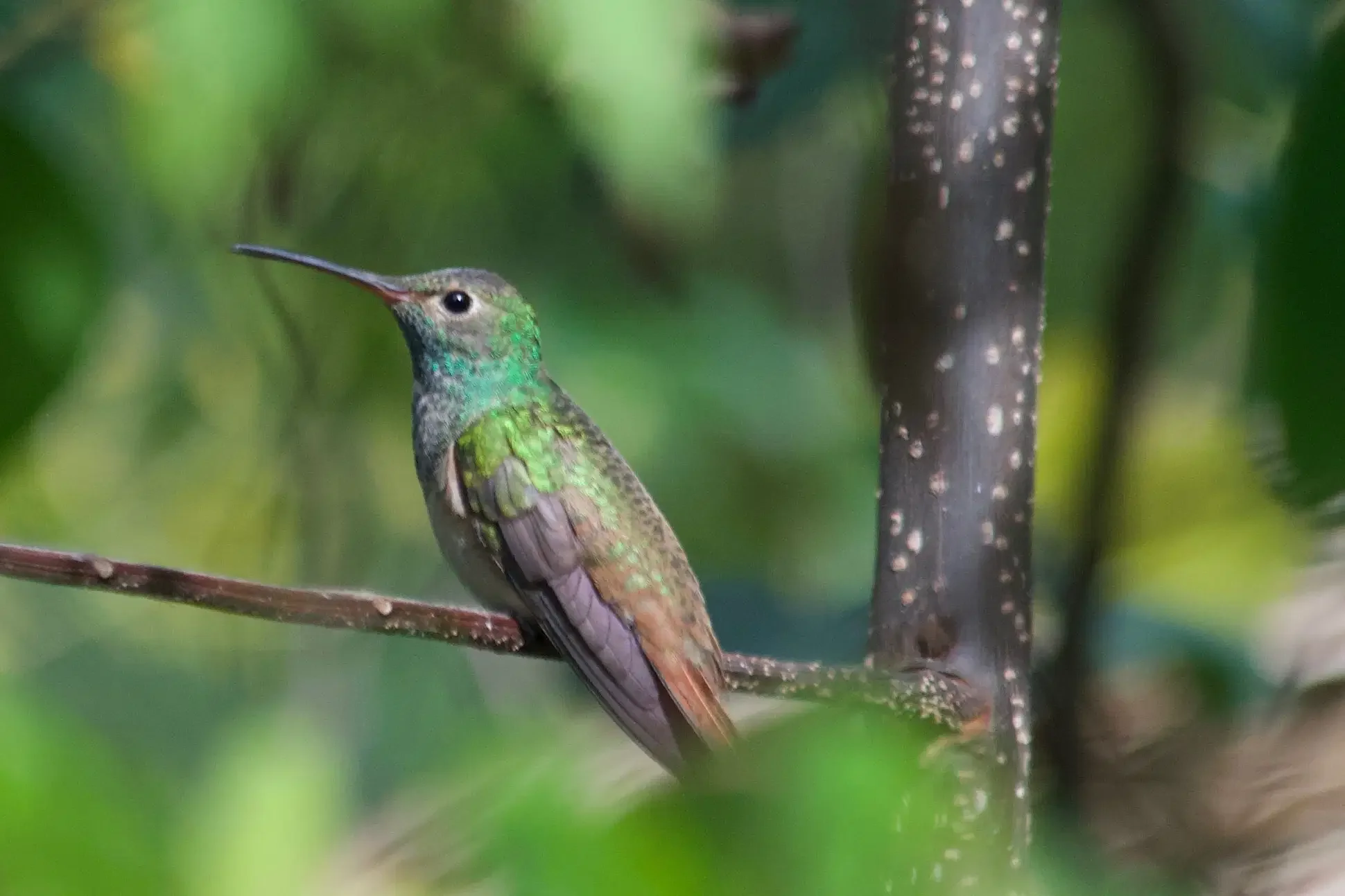
Buff-bellied Hummingbird.
Most native hummingbird flowers want full sun and should be located so that they get at least 6 hours of sunlight a day. The following list of plants were used to create Hummingbird Haven: Salt Marsh Mallow, Texas Lantana, Coralbean, Wooly Rose Mallow, Flame Acanthus, Texas Sage, Mexican Honeysuckle, Turk’s Cap, Coral Honeysuckle, Texas Coneflower, Cardinal Flower, Blue Sage, Tropical Sage, White Gaura, Lemon Beebalm, Red Yucca, and Shrimp Plant. Turk’s Cap, Cardinal Flower, and Shrimp Plant can also handle part shade, so if you have some sun with some shade and still want to attract hummingbirds, try those plants. The plants in our garden are all labeled making it easier for you to pick out your favorite plants to add to your own backyard. If you live in an apartment with a small balcony, you can try planting one of these plants in pots, being sure to water them daily in the hot sun. Turk’s Cap will do extremely well in a pot.

Allen's Hummingbird seen at Russ Pittman Park spring 2026.
Alternatively, or in addition to the plants, you can set up hanging hummingbird feeders. After picking out a feeder, you can make your own nectar by measuring out 1 part white sugar to 4 parts of boiling water, mixed thoroughly. (No other additives or dye are needed.) When the mixture is cool, add to your feeder, hang, and hope that a hummingbird spots it quickly. It’s essential that you keep feeders clean and replace the sugar water mixture at least once every three or four days, and every two days when the temperature is above 100 degrees. Sanitize feeders with hot water and weak vinegar or bleach solution and rinse well. If possible, locate your feeders in the shade to keep the sugar water from getting cloudy.
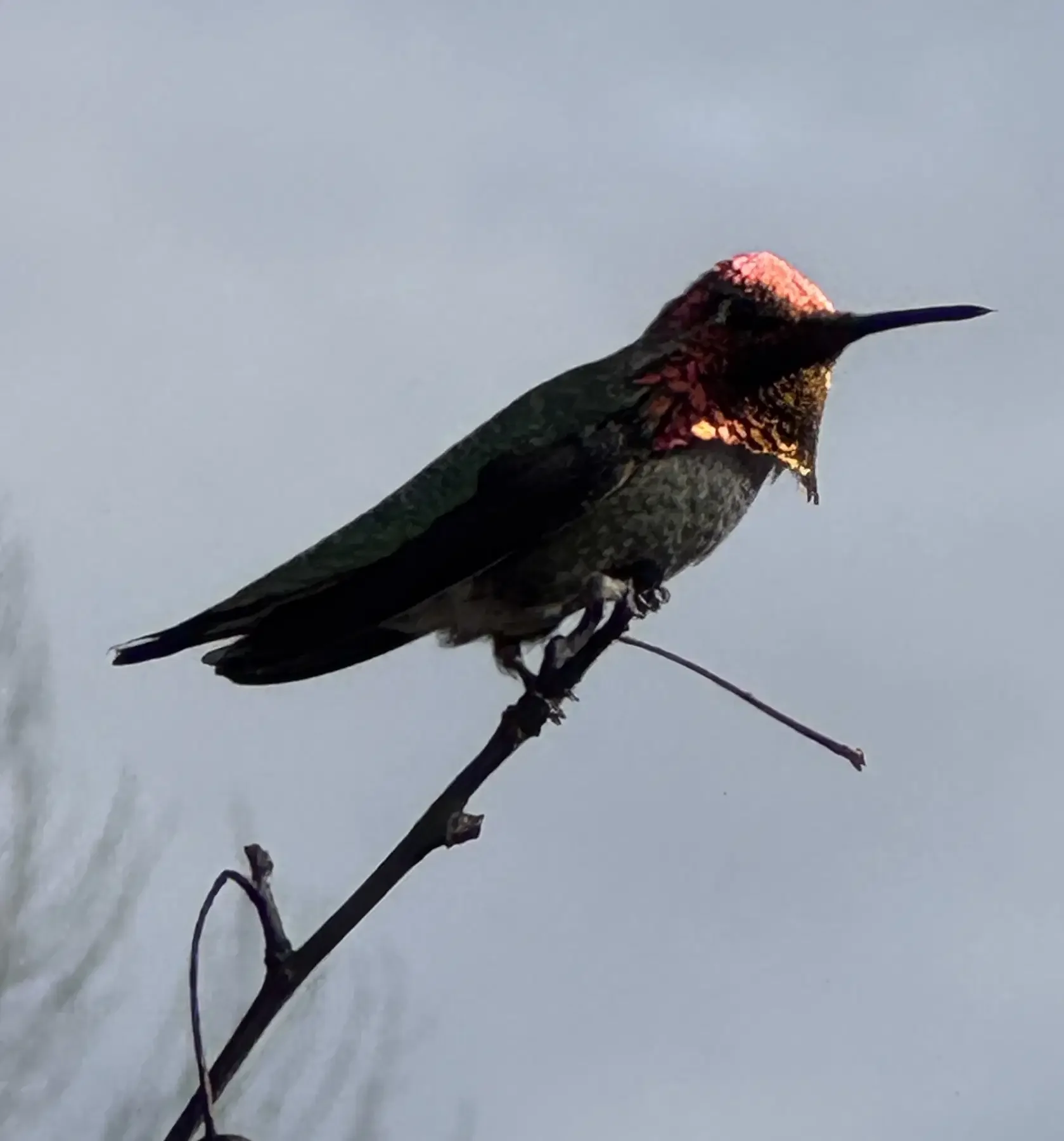
Anna's Hummingbird.
“Hummingbirds are tiny, vibrant marvels of nature, renowned for their dazzling colors and extraordinary agility. Despite being some of the smallest birds in the world, they have a big impact as pollinators, indicators of climate change, and in balancing insect populations. Weighing less than a marshmallow, they fly at speeds of up to 30 miles per hour, constantly moving as they travel between plants. Hummingbirds have co-evolved with numerous plants to pollinate them as they drink from their nectar. While nectar is their primary food source, they also consume spiders, insects and tree sap, especially during the breeding season when protein is essential for their young. They live a very fast, busy life and do it mostly solo. To conserve energy, hummingbirds can enter a state of torpor, slowing their metabolism and lowering their body temperature when environmental conditions are challenging. For neotropical migratory bird species, those that travel between North America and the tropics depending on breeding and non-breeding seasons, it is especially important to gather enough food resources and conserve energy along the way.
When not eating, resting, or migrating, hummingbirds are often seen using their unique agility in a high-speed chase to fiercely defend their territory and protect their young during breeding and nesting seasons. Instead of flapping their wings in flight, these little acrobats can rotate 180 degrees in a figure-eight pattern up to 80 times per second, allowing them to fly backwards, hover in place, and quickly change direction with remarkable control. In both territorial defense and mating rituals, males can be seen diving and flashing a colorful gorget, a patch of iridescent feathers on their throats that shimmer spectacularly in sunlight. These incredible qualities of the hummingbird have earned them many nicknames, from flying jewels and sun gems to hummers and warriors.

Hummingbird Inspired Art.
All hummingbirds are found exclusively in the Western Hemisphere, from the southern tips of South America to as far north as Alaska.” (U.S Fish and Wildlife Service)